
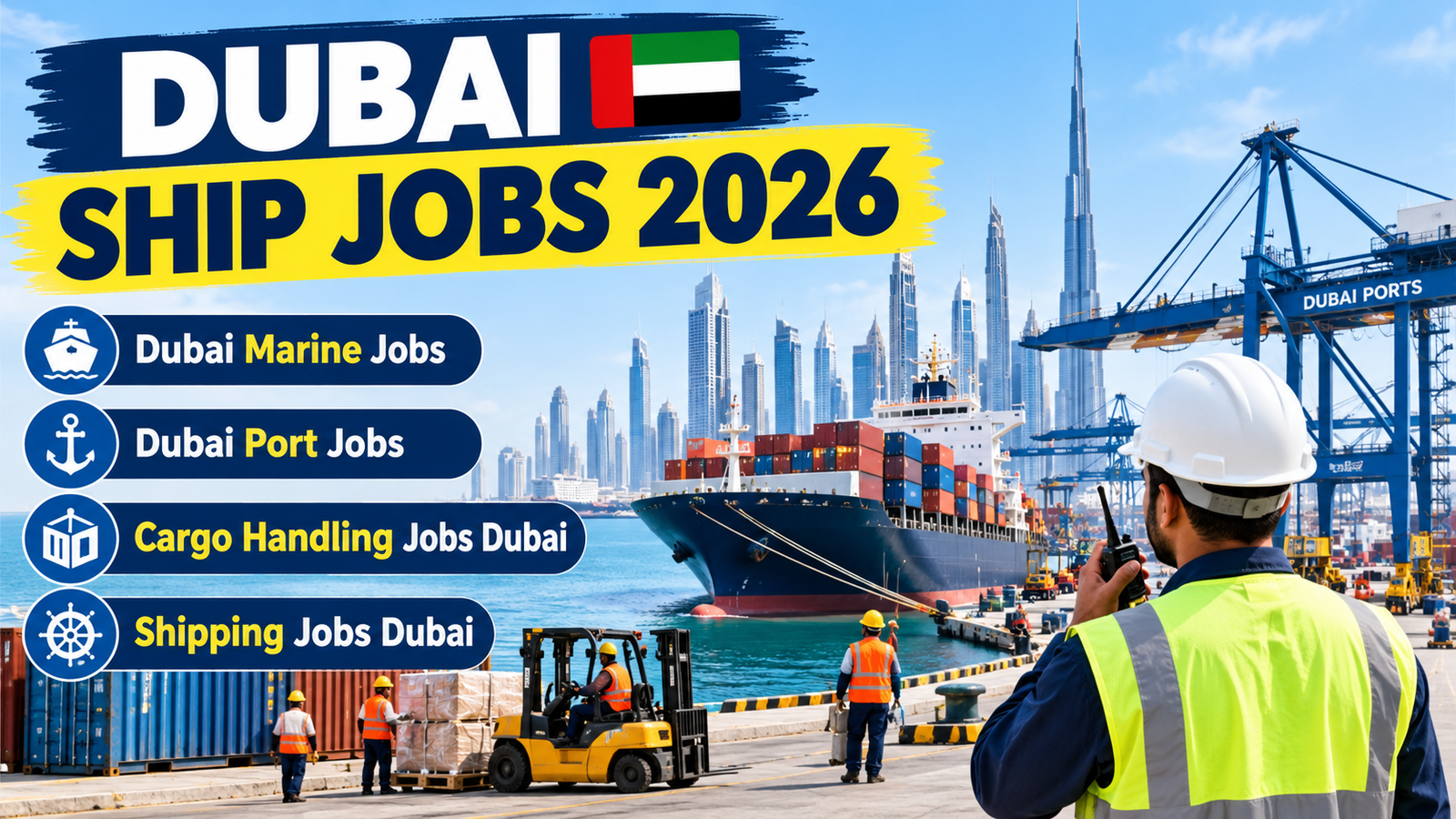
Dubai is one of the UAE’s major maritime and logistics centers, creating employment opportunities across shipping, marine services, cargo handling, port operations, warehousing, and transportation. With international trade and shipping activity continuing to support the local economy, job seekers can find a variety of roles connected with the maritime and logistics sector.
For candidates interested in working around ships, ports, cargo terminals, or marine operations, Dubai offers opportunities ranging from entry-level support positions to skilled technical and supervisory jobs.
This guide explains common Dubai ship and port-related career opportunities, the qualifications employers may look for, and how applicants can prepare for available vacancies in 2026.
Marine Jobs in Dubai
Marine employment covers a wide range of onboard and shore-based positions. The requirements depend on the vessel, employer, and type of work.
Some common positions include:
- Marine Crew
- Deckhand
- Able Seaman
- Ordinary Seaman
- Marine Engineer
- Motorman
- Marine Electrician
- Deck Officer
- Marine Operations Assistant
- Vessel Maintenance Worker
Onboard positions often require relevant maritime training, medical certification, safety courses, and previous sea experience. Officer and engineering roles generally require additional professional qualifications and certificates.
Cargo Handling Jobs
Cargo handling is an important part of shipping and port operations. Cargo workers help load, unload, move, inspect, and organize goods while following safety procedures.
Potential positions include:
- Cargo Handler
- Cargo Operations Assistant
- Loading and Unloading Worker
- Forklift Operator
- Crane Operator
- Warehouse Assistant
- Cargo Checker
- Terminal Operations Worker
The exact requirements depend on the equipment and responsibilities involved. Jobs involving cranes, forklifts, or other heavy machinery generally require appropriate training and authorization.
Port Operations Careers
Port operations involve coordinating ships, cargo, equipment, vehicles, and personnel. Both entry-level and experienced workers can find opportunities in this area.
Examples include:
- Port Operations Assistant
- Terminal Operator
- Shipping Coordinator
- Logistics Coordinator
- Cargo Planner
- Yard Operations Assistant
- Marine Services Coordinator
- Port Supervisor
Employees in these roles may help coordinate vessel arrivals and departures, cargo movements, documentation, terminal activities, and communication between different teams.
Qualifications and Skills
The qualifications required for Dubai ship and port jobs vary considerably.
For entry-level positions, employers may focus on basic education, physical ability where relevant, reliability, communication skills, and willingness to work shifts.
Skilled maritime positions may require:
- STCW certification
- Certificate of Competency
- Valid medical fitness certificate
- Seafarer’s documents
- Relevant sea-service experience
- Technical qualifications
- Safety training
- Equipment operating certificates
For shore-based logistics and port positions, knowledge of computers, inventory systems, shipping documentation, and warehouse operations can be useful.
Experience Can Improve Job Opportunities
Previous experience in shipping, logistics, warehouses, construction, manufacturing, transportation, or marine services can be useful when applying for relevant Dubai vacancies.
Applicants should clearly mention their previous responsibilities on their CV. For example, a candidate with cargo-handling experience should describe the equipment used, types of cargo handled, safety procedures followed, and relevant certifications.
Marine professionals should include vessel experience, rank, sea service, certificates, and technical skills.
Working Hours and Shift Work
Ports and shipping operations can operate around the clock. As a result, employees may be required to work rotating shifts, weekends, nights, or public holidays depending on the position.
Applicants should check the working schedule, overtime arrangements, rest periods, and other employment conditions before accepting an offer.
Jobs involving physical cargo handling may also require employees to work outdoors or in industrial environments.
Salary and Employment Benefits
Compensation varies according to the position, qualifications, experience, employer, and employment contract.
Entry-level cargo and support roles generally have different salary structures from skilled marine officers, engineers, supervisors, and technical specialists.
Depending on the employer, an employment package may include benefits such as:
- Accommodation
- Transportation
- Medical insurance
- Annual leave
- Overtime pay
- Meal allowances
- Travel benefits
These benefits are not guaranteed for every position, so candidates should review the complete written employment offer before making a decision.
How to Apply for Dubai Ship Jobs
Start by preparing an updated CV that focuses on your relevant skills and experience. If you have maritime certificates, safety training, equipment licenses, or technical qualifications, list them clearly.
Useful documents may include:
- Passport
- Educational certificates
- Professional certificates
- Maritime training certificates
- Medical certificate
- Sea-service records
- Previous employment records
- Driving or equipment licenses where applicable
Candidates should apply through verified company career pages, reputable recruitment agencies, and established employment platforms.
Be Careful With “Limited Seat” Job Advertisements
Job advertisements sometimes use phrases such as “limited seats,” “urgent vacancies,” or “limited openings” to attract applicants. Job seekers should verify the actual vacancy before paying money or submitting sensitive documents.
Do not assume that an advertisement is genuine simply because it uses the name of a well-known shipping company or port. Verify the employer, recruiter, job location, salary, visa arrangements, and application process independently.
Applicants should be especially cautious about requests for large upfront payments in exchange for guaranteed employment or visas.
Career Growth in the Maritime Industry
Dubai’s maritime and logistics sector can offer different career-development paths. An entry-level worker may gain experience in cargo handling, warehouse operations, or terminal activities and later move into supervisory or coordination roles.
Similarly, marine crew members can progress through additional training, sea experience, and professional certifications.
Possible long-term career paths include:
Cargo Handler → Senior Cargo Worker → Supervisor → Operations Coordinator
Warehouse Assistant → Inventory Controller → Logistics Coordinator → Warehouse Supervisor
Marine Crew → Senior Crew Member → Officer-level Career
The exact progression depends on qualifications, experience, employer requirements, and professional certification.
Conclusion
Dubai ship and port jobs cover many career areas, including marine crew, cargo handling, vessel support, warehouse operations, logistics, and port management. Candidates with relevant qualifications and practical experience can explore opportunities across this broad sector.
Before applying, prepare a professional CV, keep your certificates up to date, verify vacancies through reliable sources, and carefully review employment contracts. Rather than relying only on claims such as “limited seats,” focus on confirming the employer and the actual job conditions.
With the right training, experience, and documentation, Dubai’s maritime and logistics industry can provide a range of career opportunities for both experienced professionals and workers starting their careers.
