
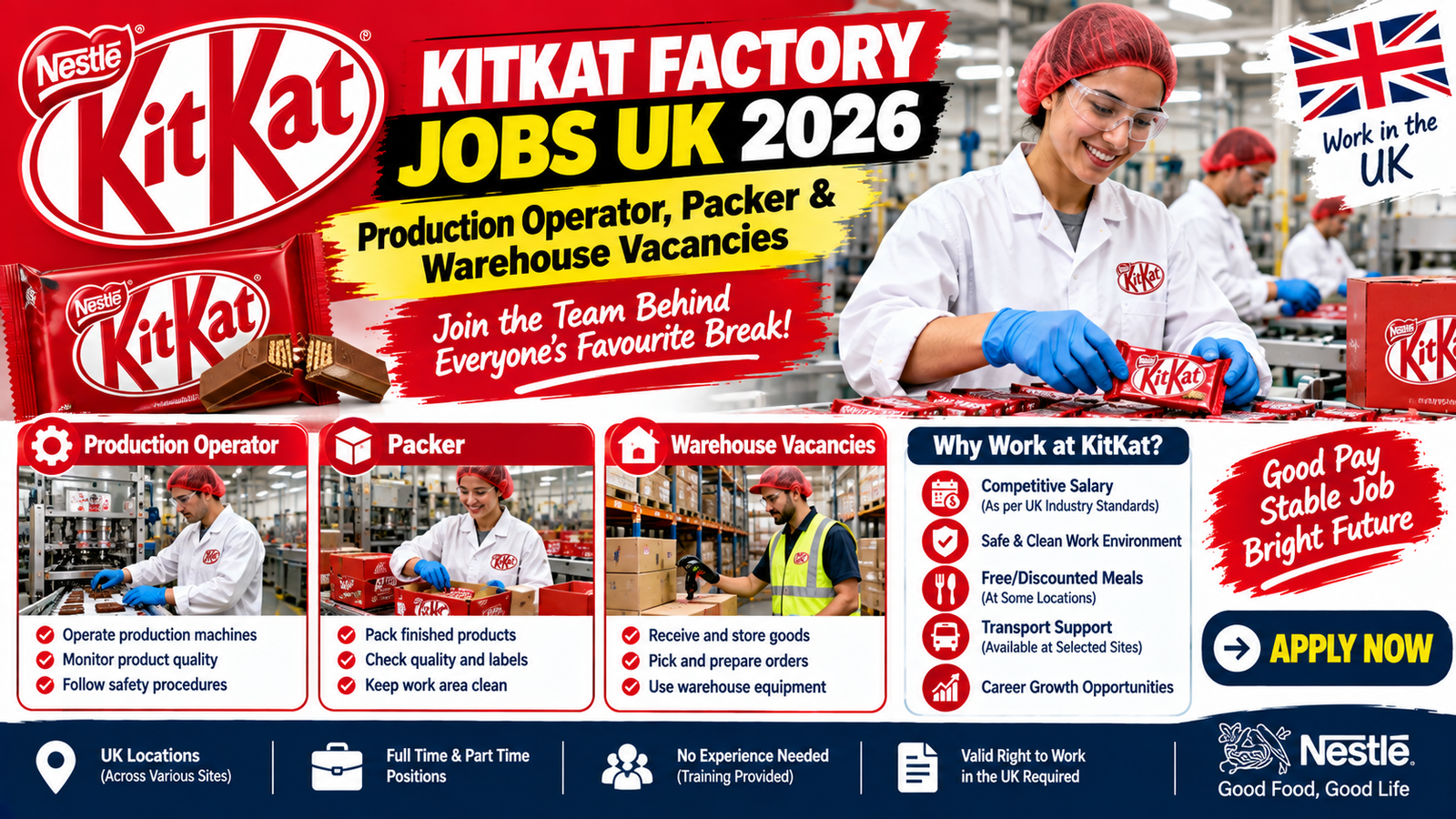
KitKat factory jobs in the UK can be an interesting employment option for people looking for opportunities in food manufacturing, production, packaging, and warehouse operations. KitKat is a well-known chocolate brand produced by Nestlé, and food manufacturing facilities require employees for a wide range of activities. Production operators, packers, warehouse workers, machine operators, quality control employees, maintenance staff, and other workers can all play an important role in the manufacturing process. For candidates interested in factory and warehouse employment, these positions can provide an opportunity to gain practical experience in a structured workplace.
Production operator jobs are an important part of chocolate manufacturing. Production operators may work with machinery and production lines used to manufacture, process, package, or prepare food products. Their responsibilities can include operating production equipment, monitoring machines, checking production output, maintaining cleanliness around the work area, and following workplace safety procedures. Employees are generally expected to follow instructions carefully because food manufacturing requires consistent production standards and strict hygiene practices.
Factory packer jobs can involve preparing finished products for distribution. Packers may place products into packaging, check labels, inspect packages for visible problems, arrange products into boxes, and prepare finished goods for transportation. Packaging employees need to work efficiently while maintaining attention to detail. They may also be required to stand for extended periods and work around automated machinery. Depending on the factory and shift, packers can work individually or as part of a larger production team.
Warehouse jobs are another important part of food manufacturing operations. Warehouse workers may receive materials, move products, organize stock, prepare orders, load or unload deliveries, and maintain accurate inventory records. In a large manufacturing environment, warehouse teams work closely with production departments to make sure raw materials and packaging supplies are available when required. Finished products also need to be stored and prepared for distribution. Warehouse employees may use equipment such as pallet trucks or forklifts, depending on their position and training.
Food factories place strong importance on hygiene and safety. Employees working in production, packing, and warehouse areas are generally required to follow workplace rules designed to protect both workers and consumers. This may include wearing appropriate protective clothing, following handwashing procedures, keeping work areas clean, and following instructions related to food safety. Employees may receive training before starting their regular duties, particularly when working with machinery, food products, or workplace equipment.
The salary for factory jobs in the UK varies according to the employer, location, position, experience, shift pattern, and employment contract. Production operators, warehouse workers, and packers can have different pay rates depending on their responsibilities. Some positions may also involve overtime or shift work, and applicable employers may offer additional payments for certain working patterns. Candidates should always check the specific vacancy advertisement and employment contract for accurate information about salary, working hours, overtime, and benefits.
Working hours in food manufacturing can vary considerably. Factories may operate for long hours or continuously to maintain production schedules, meaning employees may be required to work morning, afternoon, evening, or night shifts. Weekend and holiday work can also be required depending on production needs. Applicants should be prepared for flexible working arrangements and should confirm the exact shift pattern before accepting a job. Workers should also understand their scheduled breaks, weekly rest periods, and overtime arrangements.
The eligibility requirements for production operator, packing, and warehouse jobs can depend on the position. Some entry-level roles may not require extensive previous factory experience. Employers may focus on reliability, punctuality, willingness to learn, physical fitness, attention to detail, and the ability to follow instructions. Candidates working in warehouse roles may need additional training for equipment such as forklifts. Machine operator positions can also require technical knowledge or previous experience depending on the complexity of the production equipment.
Applicants should prepare a clear CV when searching for UK factory jobs. The CV should include previous employment experience, education, practical skills, warehouse or production experience, and contact information. Candidates with experience in food manufacturing, packaging, logistics, warehouse operations, retail, hospitality, or general factory work may be able to use their existing skills when applying. Experience with production machinery, inventory systems, quality checks, health and safety procedures, or warehouse equipment can also be useful for relevant positions.
People applying from outside the UK should pay particular attention to work authorization requirements. Not every factory or warehouse vacancy provides visa sponsorship, and candidates should not assume that an advertised position automatically includes a UK work visa. Applicants should check the official job advertisement and the employer’s eligibility requirements before making travel arrangements or paying recruitment-related costs. Any immigration or sponsorship information should be verified through official UK sources and the employer’s own recruitment information.
Job seekers should be careful when responding to advertisements for factory jobs that promise guaranteed employment, very high salaries, or immediate visas in exchange for large payments. Genuine recruitment processes normally provide clear information about the employer, job responsibilities, salary, location, and employment terms. Candidates should verify the company and vacancy before sharing sensitive documents or making payments. Using official company career pages and recognized recruitment platforms can help applicants identify legitimate opportunities.
Working in a food manufacturing facility can also provide opportunities for career development. An employee may begin in an entry-level packing or production role and gain experience in manufacturing processes, quality control, warehouse operations, machinery, and workplace safety. With appropriate training and experience, workers may progress into senior operator, team leader, production supervisor, warehouse coordinator, quality assurance, or other manufacturing-related positions. Career development depends on the employer, available training, individual performance, and the requirements of higher-level roles.
Overall, KitKat-related factory and manufacturing jobs in the UK can cover a variety of roles including production operators, packers, warehouse workers, machine operators, and support staff. These positions can be suitable for people interested in practical work and food manufacturing environments. The actual availability of vacancies, salary, benefits, location, eligibility requirements, and sponsorship options can change over time. Candidates should therefore check current official vacancies, understand the exact job description, verify work authorization requirements, and carefully review the employment contract before accepting any position.
