
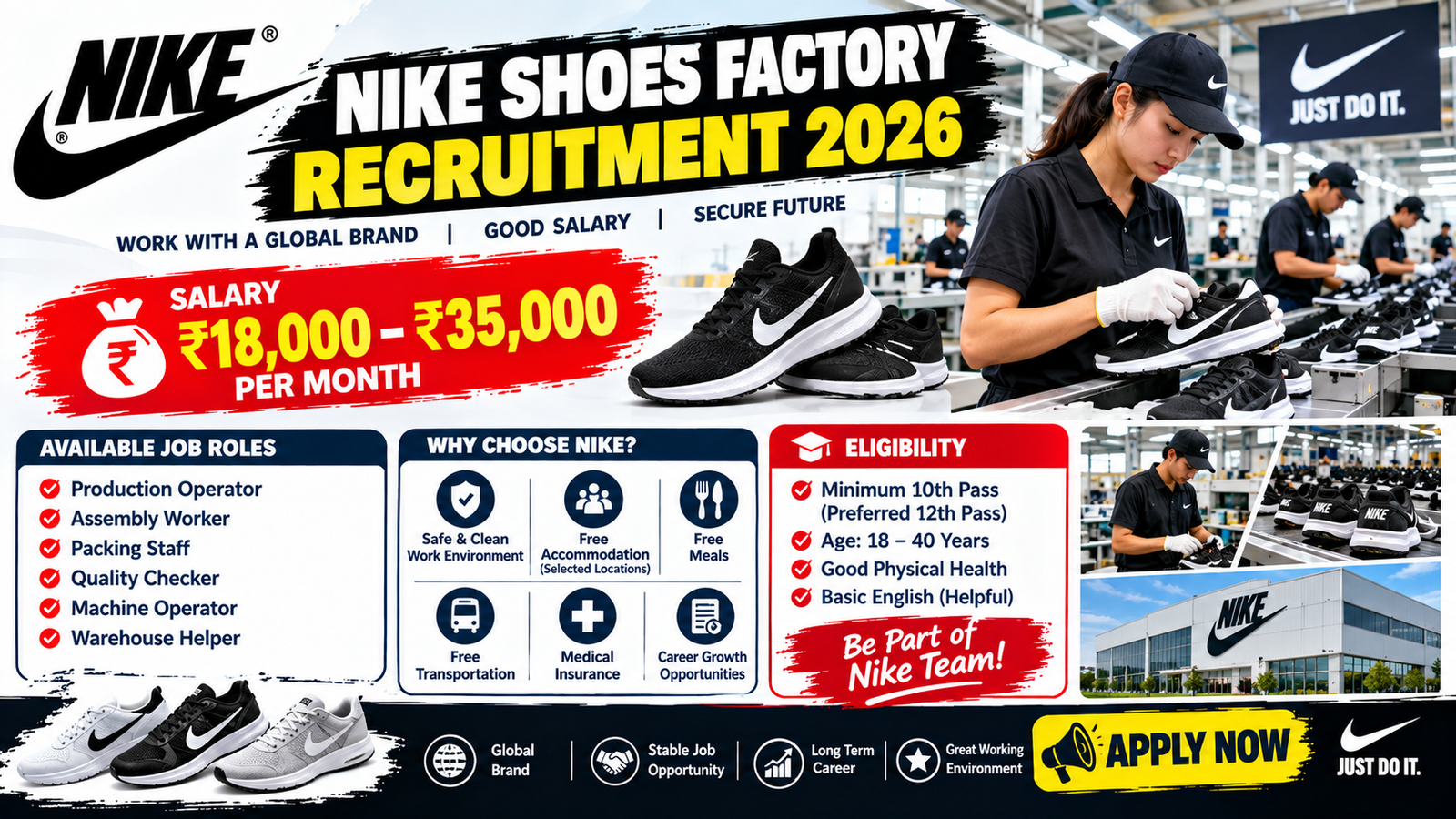
Nike is one of the world’s best-known sportswear brands, and its footwear supply chain involves factories, manufacturing partners, quality-control teams, warehouses, logistics companies, and other production businesses in different countries.
For job seekers interested in footwear manufacturing, Nike Shoes Factory Recruitment 2026 may be a useful search topic. However, candidates should understand that Nike products are manufactured through a global network of independent manufacturing partners rather than assuming every factory producing Nike products directly employs workers through Nike.
Job availability, salary, qualifications, and recruitment procedures depend on the specific factory, supplier, country, and position.
Types of Nike Footwear Factory Jobs
Footwear manufacturing involves many different departments. Depending on the location and manufacturing partner, vacancies may include:
- Production Worker
- Factory Helper
- Machine Operator
- Shoe Stitching Worker
- Cutting Machine Operator
- Shoe Assembly Worker
- Quality Control Inspector
- Packing Worker
- Warehouse Assistant
- Material Handler
- Maintenance Technician
- Production Supervisor
- Storekeeper
- Logistics Worker
Entry-level jobs may focus on basic production and packing duties, while technical and supervisory positions require additional qualifications or experience.
Production Worker Jobs
Production workers help manufacture footwear according to established production procedures.
Typical responsibilities can include:
- Operating basic production equipment
- Handling footwear materials
- Assisting with shoe assembly
- Following production instructions
- Checking products during production
- Maintaining a clean work area
- Following workplace safety procedures
Previous factory experience may be useful, although some employers provide job-specific training.
Shoe Stitching and Assembly Jobs
Shoe manufacturing requires skilled workers for stitching, assembly, gluing, finishing, and other production stages.
Experienced footwear workers may be responsible for:
- Stitching shoe components
- Joining upper materials
- Applying adhesives
- Attaching soles
- Checking alignment
- Performing finishing work
- Identifying production defects
Workers with previous footwear manufacturing experience may have access to more specialized positions.
Machine Operator Jobs
Modern footwear factories use various machines throughout the manufacturing process.
Machine operators may be responsible for:
- Setting up production equipment
- Operating machinery
- Monitoring production
- Checking machine performance
- Reporting equipment problems
- Performing basic machine adjustments
- Following safety procedures
Technical knowledge and previous machine-operation experience may be required for certain positions.
Quality Control Jobs
Quality control is an important part of footwear manufacturing.
Quality-control employees may inspect shoes for:
- Stitching problems
- Incorrect sizing
- Surface defects
- Sole attachment problems
- Color differences
- Material damage
- Packaging errors
Some quality-control positions require previous manufacturing experience or technical training.
Packing and Warehouse Jobs
After footwear production is completed, products need to be inspected, packed, stored, and prepared for shipment.
Warehouse and packing employees may:
- Pack finished shoes
- Attach labels
- Check product information
- Move cartons
- Organize inventory
- Prepare shipments
- Record stock information
These jobs can involve standing, lifting, walking, and working in shifts.
Qualifications for Factory Jobs
Requirements vary depending on the employer and position.
Entry-level positions may require:
- Basic education
- Ability to follow instructions
- Physical ability to perform factory work
- Basic communication skills
- Willingness to work shifts
Skilled positions may require:
- Technical qualifications
- ITI or vocational training
- Previous factory experience
- Machine-operation skills
- Footwear manufacturing experience
Supervisory and administrative positions may require higher education and relevant professional experience.
Salary for Nike Factory Jobs
There is no single worldwide salary for Nike-related factory jobs. Pay depends on the country, factory, employer, position, experience, working hours, overtime, and local labor regulations.
A job advertisement may quote a monthly salary, hourly wage, or piece-rate payment. Candidates should verify whether the advertised figure is gross or net and whether overtime, bonuses, transportation, meals, accommodation, and other benefits are included.
Applicants should avoid advertisements that promise unusually high salaries without clearly identifying the employer and employment contract.
Working Hours
Factory employees commonly work according to production schedules. Depending on the facility, jobs may involve:
- Day shifts
- Evening shifts
- Night shifts
- Rotating shifts
- Weekend work when required
Working hours and overtime should be clearly explained in the employment contract.
Benefits and Facilities
Benefits vary by factory and country. Depending on the employer, workers may receive:
- Paid leave
- Statutory benefits
- Health or medical coverage
- Overtime payments
- Employee training
- Transportation support
- Meal facilities
- Attendance incentives
- Production bonuses
Not every benefit is available at every factory, so candidates should confirm the details before accepting a job.
How to Apply for Nike-Related Factory Jobs
Job seekers should first identify the actual employer or manufacturing partner responsible for the vacancy.
Step 1: Find the Employer
Do not rely only on the phrase “Nike Factory Job.” Find the company name that is actually hiring.
Step 2: Check the Official Recruitment Source
Look for vacancies on the employer’s official career page or a reputable employment platform.
Step 3: Prepare Your CV
Include:
- Full name and contact details
- Education
- Previous factory experience
- Machine-operation skills
- Footwear or manufacturing experience
- Technical qualifications
- Languages
- Relevant certificates
Step 4: Submit the Application
Follow the application instructions provided by the actual employer.
Step 5: Complete the Selection Process
Depending on the position, applicants may be required to complete an interview, skills test, document verification, medical examination, or practical assessment.
Jobs for Freshers
Some entry-level manufacturing positions may accept candidates without previous footwear-industry experience. Employers may provide training for basic production tasks.
However, candidates should carefully check the minimum age, education, physical requirements, working hours, and other conditions before applying.
Having experience in manufacturing, packaging, stitching, machine operation, or warehouse work can be helpful when applying for related positions.
International Job Seekers
People applying from outside the country where a factory is located should verify employment and immigration requirements before making travel arrangements.
A legitimate international job offer should identify the employer and provide clear information about the position, salary, work location, contract, and applicable work authorization process.
Applicants should never assume that a job advertisement mentioning Nike automatically includes visa sponsorship.
Beware of Fake Nike Factory Job Offers
The popularity of Nike can make the brand attractive to scammers. Fake advertisements may use Nike’s name, logo, or photographs to appear legitimate.
Be cautious if someone promises:
- Guaranteed Nike employment
- Guaranteed visa approval
- Very high salary without experience
- Immediate selection without an interview
- Employment after paying a registration fee
Never send money to an unknown recruiter simply because they claim to represent a major brand.
Verify the company, recruitment agency, job location, and employment contract independently.
Career Growth
A factory job can provide useful manufacturing experience. With training and experience, workers may progress into roles such as:
- Senior Production Worker
- Machine Specialist
- Quality Inspector
- Team Leader
- Production Supervisor
- Warehouse Supervisor
- Maintenance Technician
- Production Coordinator
Additional technical training can improve opportunities for skilled manufacturing positions.
Conclusion
Nike Shoes Factory Recruitment 2026 can be an attractive search for people interested in footwear manufacturing, production, quality control, warehouse operations, and logistics. However, candidates should identify the actual factory or manufacturing company behind each vacancy rather than assuming that every Nike-related factory job is directly employed by Nike.
Salary, vacancies, qualifications, benefits, and working conditions vary by location and employer. Before applying, check the official recruitment source, prepare a professional CV, understand the employment contract, and verify any work-permit requirements.
Most importantly, be careful with recruitment scams and avoid paying large upfront fees for supposedly guaranteed Nike factory employment.
