
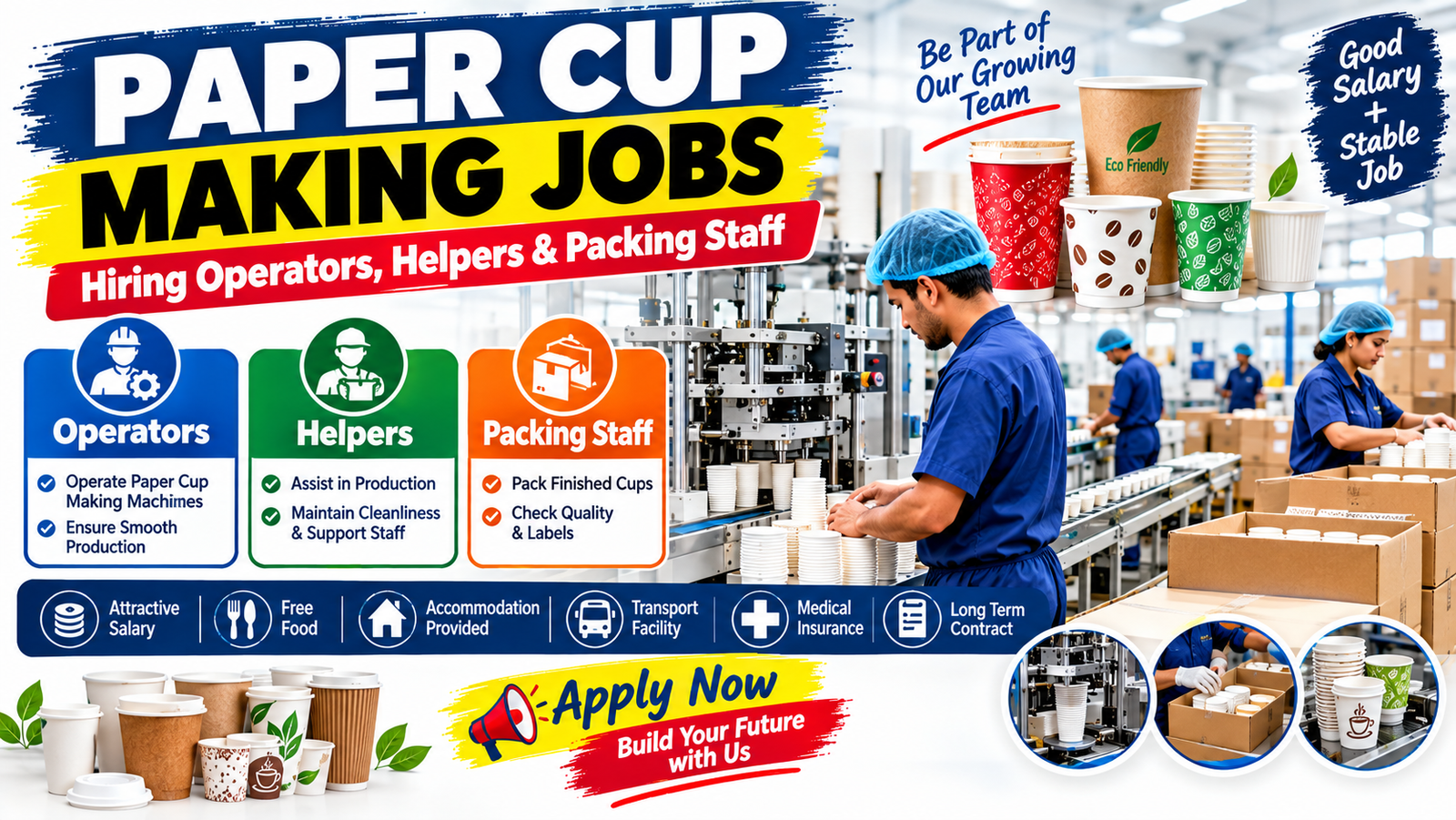
The paper cup manufacturing industry provides employment opportunities for machine operators, production workers, helpers, quality checkers, and packing staff. As demand for disposable food and beverage packaging continues across restaurants, cafés, offices, events, catering businesses, and takeaway services, paper cup production facilities require workers to support manufacturing and packaging operations.
Paper cup making jobs can be suitable for candidates with different levels of education and experience. Some entry-level positions provide on-the-job training, while machine operator and technical roles may require previous factory experience or knowledge of production equipment.
This guide explains the main types of paper cup factory jobs, common responsibilities, required skills, salary considerations, and how candidates can find legitimate vacancies.
Types of Paper Cup Making Jobs
A paper cup manufacturing facility usually has several departments. Workers may be involved in production, machine operation, quality control, material handling, or packaging.
Common positions include:
- Paper Cup Machine Operator
- Production Worker
- Factory Helper
- Packing Staff
- Quality Checker
- Machine Assistant
- Store Assistant
- Maintenance Technician
- Production Supervisor
- Warehouse Worker
The exact responsibilities depend on the factory and job position.
Paper Cup Machine Operator Jobs
Machine operators are responsible for operating production equipment used to manufacture paper cups. They may monitor the machine, adjust settings, inspect output, and report technical problems.
Typical duties include:
- Operating paper cup manufacturing machines
- Checking machine settings
- Monitoring production output
- Feeding materials into machines
- Inspecting finished cups
- Identifying production defects
- Performing basic machine cleaning
- Reporting equipment problems
Employers may prefer candidates with previous experience operating packaging or manufacturing machinery. Technical training can also be useful.
Factory Helper Jobs
Factory helpers support operators and production teams with routine tasks. These positions can be suitable for candidates who are starting their manufacturing careers.
A helper may be responsible for:
- Supplying raw materials
- Moving paper rolls and packaging materials
- Assisting machine operators
- Collecting finished products
- Cleaning work areas
- Organizing production materials
- Following safety instructions
The work can involve standing, walking, lifting, and repetitive activities, depending on the factory.
Packing Staff Jobs
Packing employees prepare finished paper cups for storage, transportation, and delivery to customers.
Typical responsibilities include:
- Counting finished cups
- Packing products into bags or cartons
- Checking packaging
- Applying labels
- Preparing cartons for dispatch
- Inspecting products for visible defects
- Maintaining a clean packing area
Attention to detail is important because incorrectly packed or damaged products may affect customer orders.
Quality Control Jobs
Quality-control workers inspect paper cups during and after production. They help identify problems with size, shape, printing, sealing, or other manufacturing characteristics.
Responsibilities may include:
- Inspecting finished products
- Identifying defective cups
- Checking dimensions
- Monitoring production quality
- Recording inspection results
- Informing production staff about quality issues
Previous quality-control or manufacturing experience can be helpful for these roles.
Skills and Qualifications
Requirements vary depending on the position.
Entry-level helper and packing jobs may require basic education, good physical stamina, and the ability to follow instructions.
Machine operator positions may require previous factory experience or technical training.
Useful skills include:
- Machine operation
- Basic mechanical knowledge
- Attention to detail
- Teamwork
- Time management
- Safety awareness
- Ability to follow instructions
- Basic communication
- Quality inspection
- Workplace cleanliness
Candidates with experience in packaging, printing, food manufacturing, plastic production, or other factory environments may have transferable skills.
Working Hours
Manufacturing facilities may operate multiple shifts to maintain production schedules. Employees may therefore work morning, evening, or night shifts.
Depending on the factory, workers may also be required to work overtime during periods of high demand.
Applicants should ask about:
- Working hours
- Shift timings
- Weekly days off
- Overtime rates
- Break periods
- Workplace conditions
Understanding these conditions before accepting a job can help avoid misunderstandings.
Salary and Benefits
Paper cup factory salaries vary according to location, employer, position, experience, and working hours.
Entry-level helpers and packing workers generally have different compensation from experienced machine operators, technicians, quality inspectors, and supervisors.
Some employers may provide additional benefits such as:
- Overtime payments
- Transportation
- Accommodation
- Meals or food allowance
- Medical benefits
- Paid leave
- Performance incentives
Benefits are not guaranteed and should be confirmed in the employment contract.
How to Apply for Paper Cup Factory Jobs
Candidates should prepare a simple and professional CV. Include your previous work experience, education, technical skills, and contact information.
If you have previously worked in a factory, mention the type of machines you operated and the responsibilities you handled.
For packing jobs, highlight experience with product packing, counting, labeling, warehouse work, or quality inspection.
For technical positions, include relevant certificates and maintenance or machine-operation experience.
Candidates can search for vacancies through local job portals, manufacturing companies, recruitment agencies, and company career pages.
Safety in Paper Cup Manufacturing
Factory workers must follow workplace safety rules. Manufacturing equipment can contain moving parts, heated components, electrical systems, and other hazards.
Workers should:
- Follow machine operating instructions
- Use required protective equipment
- Keep work areas clean
- Avoid unsafe contact with moving machinery
- Report damaged equipment
- Follow emergency procedures
Employers should provide appropriate workplace safety training and equipment for the tasks being performed.
Career Growth Opportunities
Paper cup manufacturing can provide opportunities for workers to develop practical production skills.
A possible career path could be:
Factory Helper → Machine Assistant → Machine Operator → Senior Operator → Production Supervisor
Packing workers can also progress into quality control, warehouse operations, or supervisory roles after gaining experience and relevant skills.
Learning machine operation, basic maintenance, quality control, inventory management, and workplace safety can improve long-term career opportunities.
Beware of Fake Job Advertisements
Job seekers should be careful with advertisements promising guaranteed employment or unusually high salaries.
Before accepting a position, verify the company, workplace location, salary, working conditions, and employment contract.
Be cautious if a recruiter demands a large upfront payment, guarantees a job without an interview, or refuses to provide clear information about the employer.
Conclusion
Paper cup making jobs can provide opportunities for machine operators, factory helpers, packing staff, quality-control workers, warehouse employees, and maintenance technicians. These positions are found in manufacturing facilities producing disposable packaging for cafés, restaurants, catering companies, offices, and other businesses.
Candidates with factory experience may qualify for skilled production positions, while entry-level workers can explore helper and packing roles. The best approach is to prepare a clear CV, understand the job requirements, verify the employer, and carefully review the employment terms before joining.
With experience and additional training, workers can progress from entry-level production roles into machine operation, quality control, maintenance, or supervisory positions.
